
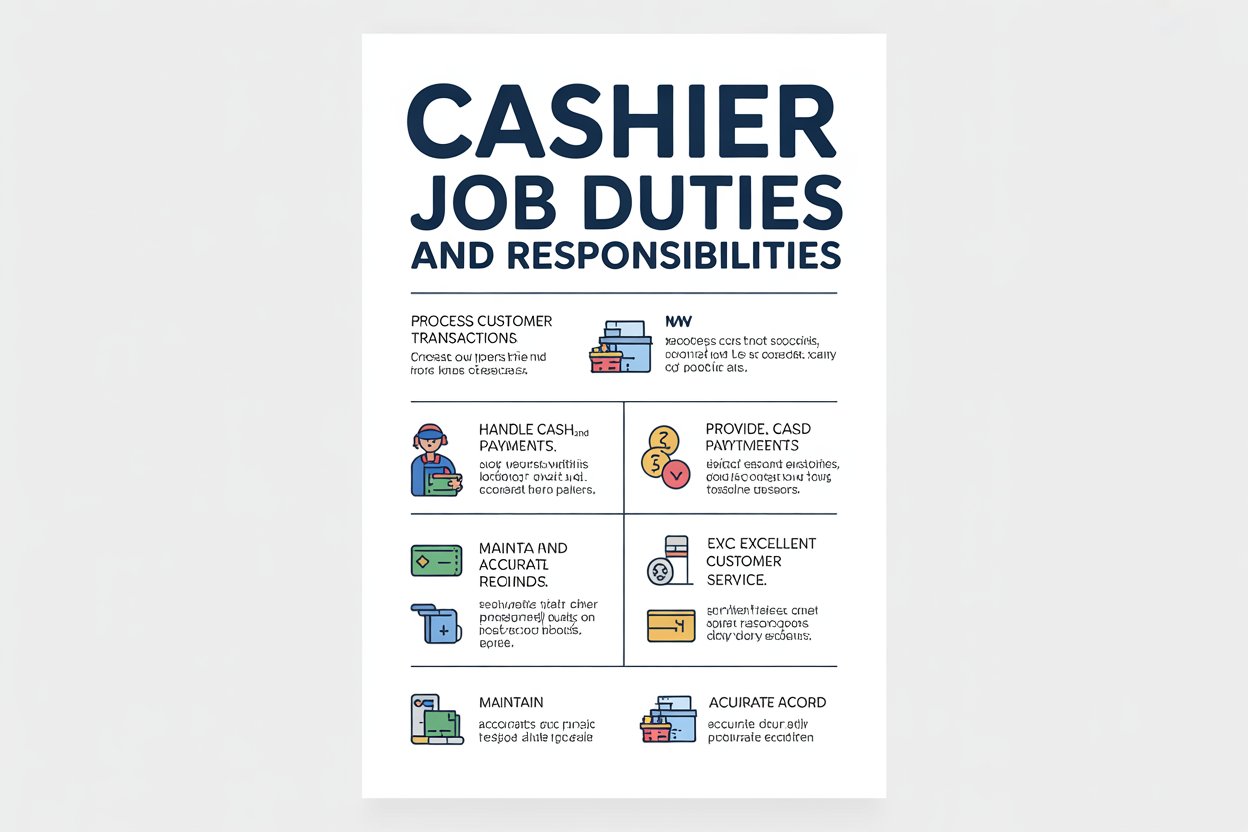
A cashier is responsible for handling customer payments and maintaining accurate transaction records. The cashier job role is one of the most in-demand positions across retail stores, supermarkets, shopping malls, restaurants, and service outlets. Cashiers play a vital role in daily business operations by ensuring smooth billing, accurate transactions, and excellent customer service. This position is ideal for individuals looking for stable employment with growth opportunities.
If you are searching for detailed information about cashier job duties, cashier responsibilities, and the day-to-day tasks of a retail or supermarket cashier, you’ve come to the right place. Understanding the cashier job role, including billing responsibilities, customer service duties, and cash handling tasks, is essential for anyone looking to start or grow a career in the retail industry. This guide covers all the cashier work responsibilities, skills required for cashiers, and the expectations employers have for efficient and professional cashiers.
A cashier plays a crucial role in the smooth operation of retail stores, supermarkets, restaurants, and various service-based businesses. At its core, the position involves handling financial transactions, providing excellent customer service, and ensuring accurate record-keeping. A skilled cashier not only processes payments efficiently but also creates a welcoming environment that encourages customer satisfaction and loyalty.
Handling Financial Transactions
The primary duty of a cashier is to manage financial transactions with precision. This includes accepting cash, credit, or digital payments for goods and services. A cashier must be attentive to ensure that the amount received is accurate and that correct change is given when needed. Mistakes in transactions can lead to financial discrepancies, making accuracy a key responsibility.
Operating the Cash Register and POS System
Cashiers are responsible for operating cash registers or point-of-sale (POS) systems efficiently. This involves scanning products, entering prices, applying discounts or promotions, and processing returns or exchanges. Being familiar with the technology used is essential to maintain smooth workflow and minimize errors.
Customer Service Excellence
Customer interaction is a major part of a cashier’s role. A good cashier greets customers warmly, answers questions about products or services, and addresses concerns politely and professionally. Strong communication skills, patience, and a friendly demeanor help in creating a positive shopping experience. This interaction often influences repeat business and overall customer satisfaction.
Balancing Cash and End-of-Day Reconciliation
At the end of a shift, cashiers are responsible for balancing cash drawers, counting the money, and reconciling it with sales records. Any discrepancies must be reported to supervisors or managers. Proper reconciliation ensures transparency and reduces the risk of financial loss for the business.
Handling Refunds, Returns, and Exchanges
Cashiers often manage refund and exchange requests. This requires knowledge of company policies and the ability to process returns quickly while maintaining a positive customer experience. Being tactful and professional during these situations is critical, as it reflects the business’s customer service standards.
Maintaining Clean and Organized Checkout Areas
The cashier’s station should always be clean, organized, and free of clutter. An orderly workspace helps speed up transactions and creates a professional impression for customers. It also reduces the likelihood of mistakes or misplaced items.
Inventory Support and Reporting
While cashiers primarily handle transactions, they may also assist in tracking inventory. This includes noting low-stock items at checkout, reporting missing products, and occasionally helping in stocking shelves. Accurate reporting ensures that the store operates efficiently and customers can find what they need.
Compliance with Policies and Regulations
Cashiers must adhere to company policies, financial procedures, and legal regulations regarding transactions. This includes following proper protocols for age-restricted products, handling sensitive customer information responsibly, and maintaining ethical standards in all interactions.
Handling Difficult Situations
Sometimes, cashiers encounter challenging situations such as unhappy customers, long lines, or system malfunctions. The ability to stay calm, professional, and solution-focused under pressure is essential. Good problem-solving skills and patience make a cashier valuable to both customers and employers.
Continuous Learning and Adaptation
Modern retail environments are constantly evolving, and cashiers must adapt to new technologies, payment systems, and customer service techniques. Being open to training and staying updated with store procedures ensures a cashier can perform their duties effectively and contribute to business growth.
Key Duties of a Cashier
- Processing cash, card, and digital payments accurately
- Issuing receipts, refunds, or exchange slips
- Assisting customers with pricing and product inquiries
- Maintaining cleanliness and organization at the checkout counter
- Balancing cash drawers at the end of each shift
- Reporting discrepancies or system issues to supervisors
The role of a cashier is essential in retail stores, supermarkets, restaurants, and service outlets. Cashiers handle transactions, assist customers, and ensure smooth billing processes. Understanding the cashier job duties helps both job seekers and employers to know the responsibilities clearly.
Responsibilities of a Cashier
- Greet customers politely and provide a friendly checkout experience
- Handle cash, credit, debit, and digital payments accurately
- Scan products and enter prices correctly into the system
- Issue receipts, invoices, and change to customers
- Maintain accuracy while handling money and transactions
- Balance the cash drawer at the beginning and end of each shift
- Assist customers with billing questions or price inquiries
- Process refunds, exchanges, and returns according to company policy
- Keep the checkout counter clean and organised
- Ensure all products are billed correctly without errors
- Follow company rules, safety guidelines, and cash-handling procedures
- Report any discrepancies, system issues, or suspicious activity to supervisors
- Support team members during busy hours
- Provide excellent customer service to maintain customer satisfaction
- Help create a smooth and positive shopping experience
What Does a Cashier Do?
A cashier is responsible for handling customer payments and maintaining accurate transaction records. They act as the final point of contact between the business and the customer, making their role extremely important for customer satisfaction.
A cashier is the first point of contact for customers at stores, supermarkets, restaurants, or service outlets. Their primary responsibility is to handle payments accurately, including cash, credit/debit cards, and digital transactions. Beyond processing payments, cashiers ensure a smooth checkout experience by issuing receipts, answering customer questions, and resolving minor billing issues. They also maintain the cash register, balance cash drawers, and report discrepancies to supervisors. In addition, cashiers assist with returns and exchanges, keep the checkout area clean and organised, and follow all company policies and safety guidelines. A good cashier not only manages financial transactions efficiently but also provides excellent customer service, creating a positive experience that encourages customers to return. Overall, the role combines accuracy, honesty, customer interaction, and teamwork to support the store’s operations and reputation.
Skills Required for a Cashier Job
To succeed as a cashier, candidates should have both technical and interpersonal skills.
Essential Skills Include
Basic Math and numerical accuracy
- Good communication and customer-handling skills
- Attention to detail
- Ability to work under pressure
- Basic computer or POS system knowledge
- Honest and responsible attitude
These skills help cashiers perform efficiently in fast-paced work environments.
Qualifications for Cashier Jobs
Most cashier positions have simple eligibility criteria, making them suitable for freshers and entry-level job seekers.
Common Requirements:
- Minimum high school education
- Basic English communication skills
- Prior experience is an advantage but not mandatory
- Willingness to work flexible shifts
Many employers also provide on-the-job training for new candidates.
Salary and Benefits for Cashier Jobs
The salary for a cashier job varies depending on experience, company, and location.
Average Salary Range:
Entry-level: AED 1,800 – AED 2,500
Experienced cashiers: AED 2,500 – AED 4,000
Additional Benefits May Include
- Accommodation or housing allowance
- Transportation facility
- Medical insurance
- Paid leave and overtime
Career Growth Opportunities
A cashier position can be a strong starting point for long-term career growth. With experience and good performance, employees can advance to roles such as:
- Senior Cashier
- Supervisor
- Store In-Charge
- Customer Service Executive
Many successful retail managers begin their careers as cashiers.
Why Choose a Cashier Job?
- Easy entry-level position
- High demand across multiple industries
- Stable monthly income
- Opportunities for promotion
- Suitable for freshers and experienced candidates
The cashier job role offers stability, growth, and valuable work experience in the retail and service industry. Whether you are starting your career or looking for a reliable job opportunity, cashier positions provide a strong foundation and long-term potential.
Stay updated with the latest cashier job openings and walk-in interviews to secure your next opportunity quickly.
We are here to support you in finding the right career opportunity. Feel free to contact us anytime.